Worlds are ending;
new ones are coming
.
Networks must be woven,
and voices need
to be amplified.
We look to solutions
and alternatives
that have existed
in this region for centuries
born from acts of resistance.

CASES

Penco

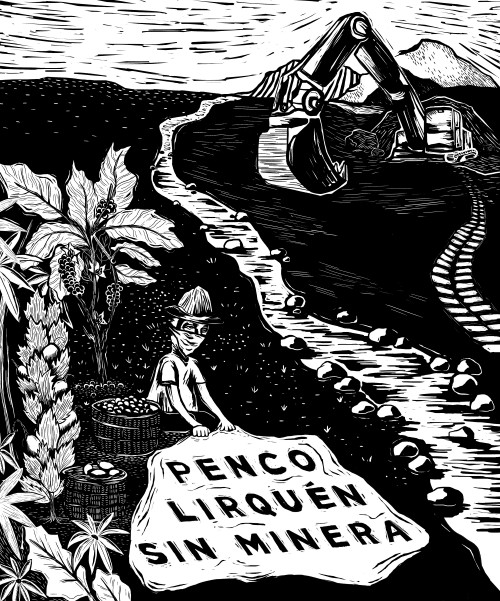
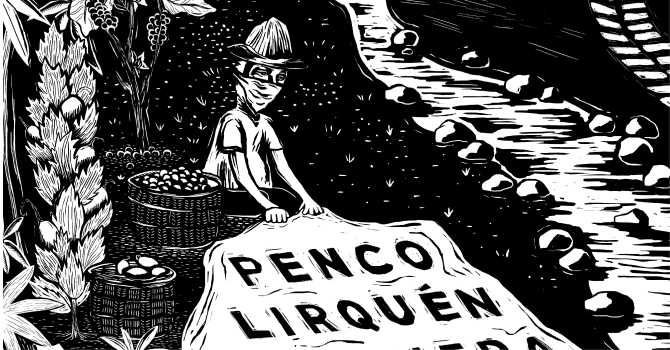
For years, the inhabitants of Penco, a small town in southern Chile, have resisted the installation of a mining project to extract rare earths in their territory. The project's latest push for approval is a direct consequence of the West's trade war with China. This has triggered a desperate search for new deposits to both undermine China's market dominance and guarantee a steady supply of raw materials for the technology, automotive, and military industries. The community resistance in Penco, facing the political and economic pressure to approve the project, reveals the contradictory colonial logic of 21st-century capitalism, which is betting on sustainability through digitalization and green energy.

Territories: Penco, Chile
Matopiba

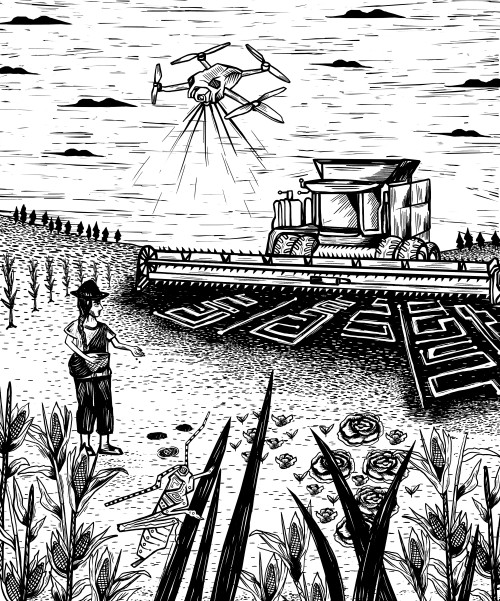
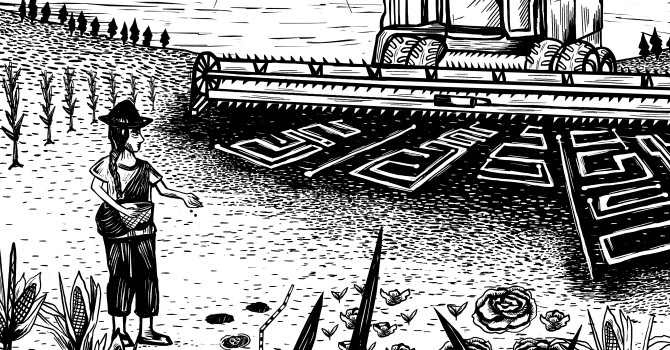
What imaginaries of the future and technology do large agribusiness companies promote? How does this vision accelerate monoculture, threaten crop diversity, and compromise our food security? This study moves between two territories: the Agrishow in Ribeirão Preto, where we map the technological imaginaries of Big Agro; and the case of Gleba Tauá, in the Cerrado do Matopiba, “a nova fronteira agrícola” (the new agricultural frontier), where digitization poses new challenges for secular agrarian conflicts. We analyze how drones, AI, and big data are being used to hide deforestation, land concentration, and violence against local communities. These technologies are part of a "digital land grabbing" that displaces communities, pitting ancestral knowledge and socio-environmental justice against the exclusive narrative of "high-tech agriculture”.

Territories: Cerrado of Matopiba, Brazil

Querétaro

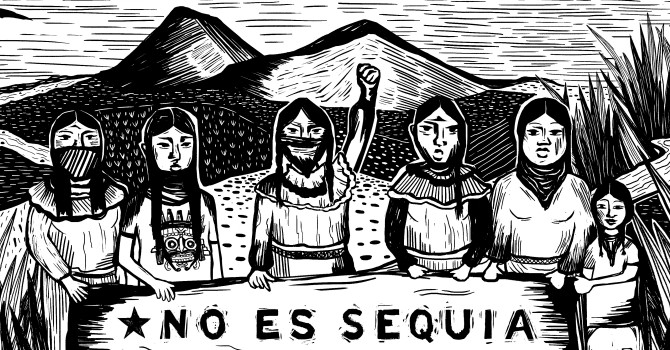
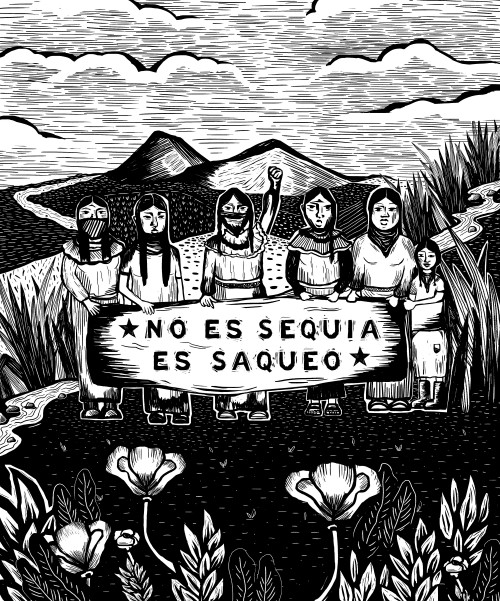
It’s not drought, it’s plunder: Querétaro,"the valley of data centers"

Paola Ricaurte Quijano and Teresa Roldán Soria

WATER

Querétaro, a small state in central Mexico, has become the country's primary hub for data centers. This boom is a direct result of neoliberal policies—like the privatization of state-owned companies, financial deregulation, and free trade agreements—that actively promoted the sector's expansion and solidified the country's subordinate role in the digital economy. The profound impacts on both the population and the environment are frequently understated in the government's industrialization narrative; a narrative characterized by institutional opacity. Environmental groups, human rights defenders, and local communities—especially Indigenous peoples and collectives who protect water and land—now face the threat of losing their shared resources linked to emerging technologies.

Territories: Querétaro, Mexico

Jalisco

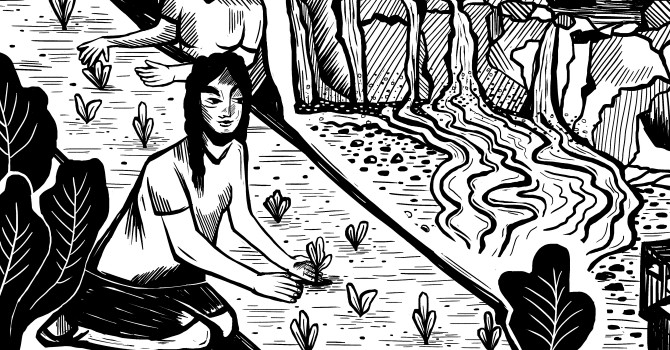
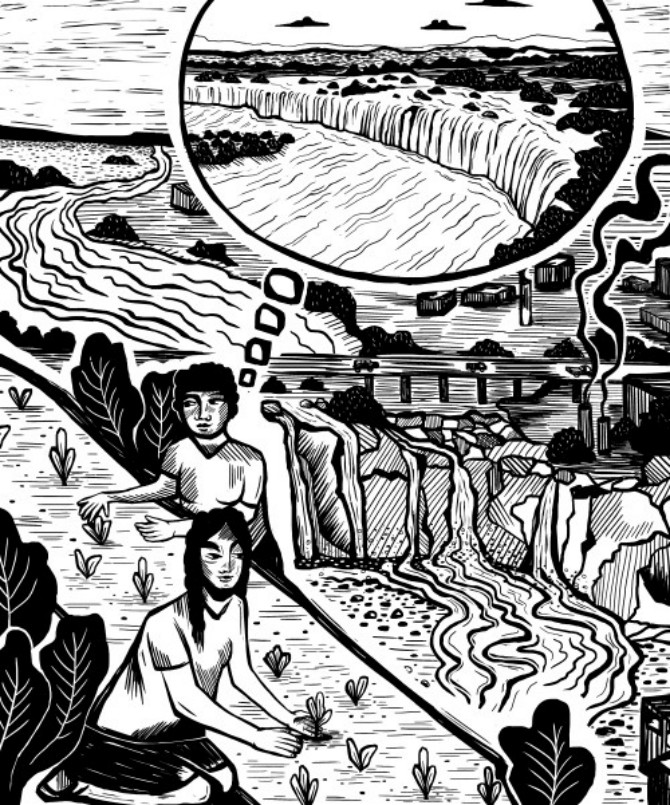
El Salto, the capital of its namesake municipality in Jalisco, is part of the Guadalajara metropolitan area. Its name comes from the 18-meter waterfall the Santiago River once had. Since the 19th century, this region has used its geographical assets—mountains, the Santiago River, and Lake Chapala— to fuel a devastating industrialization process. Starting with an initial hydroelectric plant and large textile factories, it has expanded relentlessly to become the "Mexican Silicon Valley," with 675 companies, 71 of which are transnational. After decades of exploitation that caused serious environmental damage and human rights violations, Plan Mexico 2025 threatens to intensify this historic crisis through increased foreign investment. The collective Un Salto de Vida, established 20 years ago in response to this widespread devastation, resists by coordinating strategies for territorial defense, political struggle, and environmental restoration. They are building a politicized hope that directly challenges a centuries-old extractive model.

Territories: El Salto, Jalisco, México

About TRAMAS

Tramas is an action-oriented research project of the Decolonial Feminist Coalition for Digital and Environmental Justice. By examining case studies and testimonies of resistance across Latin America, we aim to show how the digital technology production chain has a wide range of socio-environmental impacts on communities and their territories.

We seek to bring together diverse perspectives from the region and create a space for ongoing exchange and dialogue. We want to connect researchers, activists, and defenders of digital rights with those who are part of social and territorial defense movements.

Our coalition is composed of various organizations and activists from Chile, Brazil, and Mexico. Current members of the coalition are: Coding Rights (Joana Varon and Mari Tamari), Instituto Latinoamericano de Terraformación (Paz Peña), Sursiendo (Jes Ciacci), Paola Ricaurte (Red Tierra Común and Red Feminista de Investigación en Inteligencia Artificial) and Loreto Bravo.

The platform is illustrated by Giovanna Joo, with web design by Cooperativa de Diseño and web development by Diana K. Cury. The Spanish-Portuguese translation and revision was done by Ana Cristina Carvalhaes. The Spanish/Portuguese-English translation was done by Luisa Barraza Caballero, and was revised by Alicia Z. Daniel.

This project was funded by Green Screen Catalyst Fund of the Green Screen Coalition. The Brazilian case also received support from the Heinrich Böll Foundation Rio de Janeiro.